Fraud protection.
Now it’s personal.
ANZ Falcon® technology monitors millions of transactions every day to help keep you safe from fraud.
Falcon® is a registered trademark of Fair Isaac Corporation.


Fraud protection.
Now it’s personal.
ANZ Falcon® technology monitors millions of transactions every day to help keep you safe from fraud.
Falcon® is a registered trademark of Fair Isaac Corporation.
Log in
Explore more
We provide an environment that enables our employees to participate fully in the workplace and perform at their best. We believe that the safety, security, physical and mental wellbeing of our people lies at the heart of our company’s success.
An engaged workforce will help us to meet external challenges and achieve our business strategy.
Our employee engagement surveys and other employee listening strategies are an opportunity for employees to provide feedback and insights on our purpose, behaviours, values and culture; and their experience working at ANZ. We publicly report the results of our employee engagement survey and initiatives to improve engagement in our annual ESG reporting.

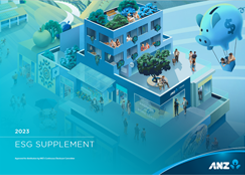
This report provides detailed information on ANZ's focus on bringing our purpose to life through helping tackle significant societal challenges that are core to our business strategy and matter to society.
These additional terms of use apply solely to "https://www.anz.com/uk-pension-scheme" and are in addition to the ANZ website terms of use.
Copyright in the Trustee’s Statement of Investment Principles, the Personal Data Privacy Statement and other documents (the “Documents”) displayed on "https://www.anz.com/uk-pension-scheme" is owned or licensed by ANZ Pensions (UK) Limited.
Except where necessary for using these Documents for personal/regulatory and non-commercial purposes, on this website, or as permitted under the UK Copyright, Designs and Patents Act 1988 or other applicable laws, these Documents may not be reproduced, adapted, uploaded to a third party, linked to, framed, performed in public, distributed or transmitted in any form by any process without the specific written consent of ANZ Pensions (UK) Limited.
Please see the Trustee’s Personal Data Privacy Statement (PDF) for information about ANZ Pensions (UK) Limited’s handling of personal data that you may submit to us.
While we have made every effort to ensure that information in the Documents is free from error, ANZ Pensions (UK) Limited does not warrant the accuracy, adequacy or completeness of the Documents on this website. All such information is subject to change without notice. ANZ Pensions (UK) Limited recommends that you seek independent advice before acting upon the Documents on this website.
These additional website terms are to be governed by the laws of England and Wales and any disputes arising out these additional terms are to be governed by the Courts of England.
You acknowledge and accept that your use of "https://www.anz.com/uk-pension-scheme" indicates your acceptance of these additional terms of use and the Trustee’s Personal Data Privacy Statement.
These are the current additional terms of use for "https://www.anz.com/uk-pension-scheme".
ANZ Pensions (UK) Limited may at any time vary these additional terms of use by publishing the varied terms of use on "https://www.anz.com/uk-pension-scheme". You accept that by doing this, ANZ Pensions (UK) Limited has provided you with sufficient notice of the variation.
ANZ Pensions (UK) Limited reserves any rights not expressly granted in these additional terms of use.